
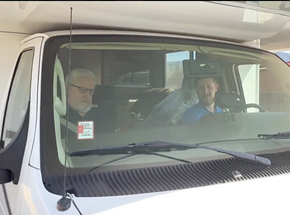
How Does a Stock Ford E450 RV Actually Drive? (Real Test Drive Q&A)
How Does a Stock Ford E450 Actually Drive? (Real Test Drive Q&A)
How does a stock Ford E450 RV handle on the road? Learn about steering issues, ride quality, sway, and what to expect before upgrading your suspension.
What Is It Like to Drive a Stock Ford E450 RV?
If you’ve ever bought—or considered buying—a Class C motorhome on a Ford E450 chassis, you’ve probably wondered:
How does it actually drive?
In this guide, we break down a real-world road performance assessment (RPA) of a stock E450 RV, covering everything from steering and ride quality to sway and handling.
This is exactly what many RV owners experience before any suspension upgrades are installed.
What is a Road Performance Assessment (RPA)?
A Road Performance Assessment is a structured test used to evaluate how an RV drives under real conditions.
A full RPA typically includes:
•Highway driving
•Back roads
•Lane change testing
•Ride quality evaluation
•Steering and handling analysis
And after the drive:
•A full chassis inspection
•Weight measurements (including four-corner weights)
The goal is simple: identify problems before recommending upgrades
What was tested in this E450 evaluation?
This particular RV was:
•A 2016 Forest River Forester
•Built on a Ford E450 chassis
•Mostly stock (with rear helper airbags)
It had:
•~32,000 miles
•Partial fuel load
•Full fresh water tank
•Minimal cargo
So this test reflects a lightly loaded, mostly stock driving condition
What was the biggest issue during the test drive?
The most noticeable issue:
A strong pull to the left
This caused:
•Constant steering correction
•Reduced driving confidence
•Increased fatigue
In fact, if the driver let go of the wheel:
•The RV would drift into the other lane
This alone is a major concern for safety and comfort
How was the steering overall?
The steering had several typical E450 characteristics:
Steering Play (5/10)
•Slight looseness in the steering
•Common with this chassis design
Returnability (6/10)
•Returned well from right turns
•Did not return evenly from left turns
Steering Wheel Position
•Off-center
•Contributed to the left-hand pull
Overall: Not terrible—but definitely not dialed in
How did the RV ride?
At first, the ride seemed acceptable—but that changed quickly.
Harshness (6/10 → worse on rough roads)
•Felt fairly normal on smooth pavement
•Became noticeably harsh over bumps
Why?
•Stiff suspension
•Light loading
•Stock shocks
Even with airbags installed, the ride still felt rough in certain conditions.
Did it have sway or body roll?
Yes—but it depended on the situation.
Steady Turns:
•Not too bad
Sudden Movements (lane changes, corrections):
Much more noticeable sway
Sway Rating: 6/10
This is typical of:
•Tall vehicles
•Soft factory suspension setups
What is "tail wag" and did this RV have it?
“Tail wag” is when the rear of the RV:
Moves independently from the front
You’ll feel it most during:
•Lane changes
•Sudden steering inputs
Tail Wag Rating: 4/10
In this test:
•The rear felt like it was “playing catch-up”
•Movement wasn’t extreme—but definitely noticeable
Was there bounce or porpoising?
Yes—both were present.
Porpoising (5/10)
•Front and rear rocking motion
•Especially noticeable on uneven roads
Bounce (5/10)
•Whole vehicle moving vertically
These issues are commonly tied to shock performance
Was there any vibration?
Yes—especially at higher speeds.
Around 50–60 MPH:
•Noticeable vibration from the front
•Felt in the steering wheel and seat
Possible causes include:
•Tire balance issues
•Tire wear or age
•Alignment problems
This will be investigated further in later steps
How did the RV handle bumps and rough roads?
This is where things really stood out.
On rougher roads:
•Impacts felt harsh and abrupt
•Steering wheel moved noticeably
•Classic bump steer behavior appeared
This is common with the E450’s Twin I-beam front suspension design.
How important is weight distribution?
Very—and this RV actually performed better than expected here.
Axle Weights:
•Front: ~4,700 lbs
•Rear: ~8,850 lbs
This is a relatively good ratio for an E450:
•Close to 50% front-to-rear balance
However:
Adding cargo (especially in the rear) will likely change handling significantly
How did it compare to other RV chassis?
Interestingly:
It felt more manageable than some older F53 Class A motorhomes
Why?
•Lower center of gravity
•Driver sits closer to the front axle
•Less exaggerated body movement
But that doesn’t mean it’s perfect—it just means:
There’s still plenty of room for improvement
What are the main problems with a stock E450?
Based on this test, the biggest issues are:
•Steering inconsistency
•Harsh ride over bumps
•Tail wag during lane changes
•Vibration at speed
•Typical body movement (sway, bounce, porpoising)
None of these are unusual—but they are exactly what upgrades are designed to fix
What’s the first step to improving handling?
Before adding upgrades, the plan is to start with:
A proper alignment
There’s a common belief that:
•Increasing caster alone will fix everything
But the real question is:
Is alignment enough… or just the first step?
That’s what future testing will reveal
What’s coming next?
The next phase includes:
•Full chassis inspection
•Four-corner weight measurement
•Tire evaluation
•Alignment adjustments
From there:
Upgrades will be added step-by-step to show real improvements
What Should You Expect From a Stock E450?
If you’re driving a stock E450—or thinking about buying one—here’s the honest truth:
It’s usable… but far from optimized
You may experience:
•Steering issues
•Ride harshness
•Handling inconsistencies
But the good news is:
These are all fixable with the right approach
Want a Better Driving RV?
Understanding how your RV performs in stock form is the first step.
…can completely transform your driving experience.
Thank you for reading this blog and stay tuned for more on our Ford E450 R&D project. Until next time we wish you safer and happier driving.