
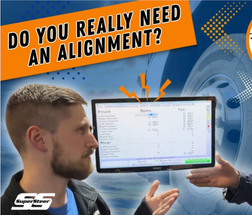
Is an RV Alignment Really Enough? (What It Fixes—and What It Doesn’t)
Is an RV Alignment Really Enough? (What It Fixes—and What It Doesn’t)
Is a wheel alignment enough to fix RV handling issues? Learn what alignment actually does, common misconceptions, and when you need more than just an alignment.
Is a Good Alignment All You Need?
You’ve probably heard it before:
“All you need is a good alignment.”
But is that actually true?
If your RV:
•Pulls to one side
•Feels unstable in wind
•Wears tires unevenly
•Or just doesn’t drive right
…it’s easy to assume alignment is the fix.
The reality?
Alignment is important—but it’s not everything
Let’s break down what alignment actually does—and when it’s not enough.
What is a “good” RV alignment?
A lot of people assume:
If the machine says “green,” you’re good to go
But that’s not always the case.
Factory specs often include:
•Wide tolerances
•Acceptable ranges (not optimal ranges)
That means your RV can technically be “within spec”…
And still have handling issues or tire wear
What does alignment actually adjust?
There are three main alignment angles:
1. Camber (tilt of the tire)
•Too positive → outside tire wear
•Too negative → inside tire wear
•Can also cause pulling left or right
2. Toe (direction tires point)
•Toe out → wandering and instability
•Toe in → tire scrubbing and wear
You can often feel this by:
Running your hand across the tire tread and feeling uneven edges. Excessive toe in or out will generally cause “feathering”, in which case you’ll feel sharp edges when running your hand across the tire in one direction (in or out) but not the other.
3. Caster (steering stability angle)
•Affects return-to-center
•Improves straight-line tracking
•Helps with steering feel
More positive caster generally:
Makes the RV easier to control and keeps it tracking straight
Why “within spec” isn’t always good enough:
Factory alignment specs are designed for:
•Mass production
•Average driving conditions
Not necessarily:
Real-world RV use
For example:
•A spec might allow a wide camber range
•But being on the edge of that range can still cause tire wear
That’s why experienced shops often:
Use custom alignment settings based on real-world performance
Can alignment fix a pulling issue?
Sometimes—but not always.
A pull can be caused by:
•Excessive camber or caster differences side to side
•Weight imbalance
•Tire issues
•·Steering components
Alignment might fix it—but it’s not the only possible cause
What problems will alignment NOT fix?
This is where most people get tripped up.
Alignment will NOT fix:
Vibration
•Usually caused by tires or balance
•Not alignment-related
Brake pulsation
•Typically a brake issue
Wind instability
•Caused by vehicle size, weight, and suspension design
Excessive sway or body roll
•Requires suspension upgrades
Alignment is just one piece of the puzzle
My steering wheel is crooked. Does that mean I need an alignment?
Sometimes a crooked steering wheel indicates an alignment issue, but not always.
On coaches with a solid front axle, toe is adjusted on both wheels at the same time. Steering wheel position is adjusted independently of toe-in, either with an adjustable drag-link (if equipped) or by moving the steering input shaft to the steering gear a spline or more, or similarly by moving the Pitman arm output from the steering gear a spline or more.
On an independent front suspension (IFS) coach it can indicate an alignment issue, but again, not always.
If you have to turn the wheel off center to keep the coach from pulling in one direction or another, then this can indicate an alignment issue.
Why does my RV still feel unstable after an alignment?
Because stability depends on more than just alignment.
Other factors include:
•Suspension design
•Shock performance
•Weight distribution
•Steering components
For example:
Wind and passing trucks will still affect your RV—even with perfect alignment
How does weight affect alignment and handling?
Weight plays a huge role.
If your RV is:
•Heavier on one side
•Unevenly loaded
It can:
•Cause pulling
•Affect steering feel
•Change alignment behavior
That’s why weighing your RV is just as important as aligning it
What is thrust angle and why does it matter?
Thrust angle refers to:
The direction your rear axle is pointing
If it’s off:
•Your RV may “dog track” (drive slightly sideways)
•You’ll constantly correct with the steering wheel
Even with a perfect front alignment:
A bad rear alignment can still cause problems
What about wind and passing trucks?
This is one of the biggest complaints—and alignment won’t solve it alone.
Wind affects:
•Tall vehicles
•Heavy vehicles
•RVs with large surface areas
To improve this, you may need:
Alignment helps—but it won’t eliminate wind effects
When is alignment the right solution?
Alignment is essential if you have:
•Uneven tire wear
•Steering pull
•Crooked steering wheel (in some cases)
•Known alignment issues
It’s the foundation—but not the full solution
When do you need more than alignment?
You likely need more if you experience:
•Sway or body roll
•Tail wagging
•Instability in wind
•Driver fatigue
In these cases:
Suspension upgrades are usually the next step
Alignment Is Step One—Not the Whole Fix
A proper alignment is important—but it’s not a magic fix for every RV handling issue.
Think of it as:
The starting point, not the finish line
To truly improve how your RV drives, you need to look at:
•Alignment
•Suspension
•Weight distribution
•Overall setup
Need Help Figuring Out What Your RV Needs?
If your RV still doesn’t feel right after an alignment, it may be time to take a deeper look. Our team at SuperSteer and Henderson's Line-Up is here to help you sort through the details because when it comes to RV handling, even small adjustments can make a big difference.