
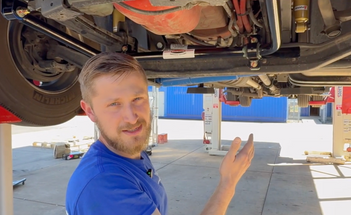
Why Does My Freightliner M2 Super C Sway So Much?
Why Does My Freightliner M2 Super C Sway So Much?
Looking to reduce sway and improve handling on your Freightliner M2 Super C? Learn how sway bars work, why chassis variations matter, and which Roadmaster sway bar may fit your coach.
Why Do Freightliner M2 Super C Motorhomes Experience Sway?
If you've ever driven a Freightliner M2-based Super C motorhome, you've probably experienced body roll when cornering, rocking on uneven roads, or being pushed around by crosswinds and passing trucks.
While some movement is normal in any motorhome, excessive sway can make driving more tiring and reduce driver confidence.
One of the most effective ways to improve stability is by upgrading the sway bars. However, the Freightliner M2 platform presents a unique challenge because there are several suspension configurations, and the correct sway bar depends on how your chassis was equipped from the factory.
Before discussing specific part numbers, it's important to understand exactly what a sway bar does and why it plays such a critical role in handling.
A sway bar, also known as an anti-sway bar, helps control body roll when a vehicle leans during turns, lane changes, crosswinds, or uneven road conditions.
As the coach leans, the sway bar twists and acts like a spring. That twisting force resists the lean and helps keep the motorhome flatter and more stable.
Benefits of a properly sized sway bar include:
•Reduced body roll
•Improved steering response
•Better cornering stability
•Increased driver confidence
•Less rocking and rolling
•Improved control in crosswinds
One important fact many RV owners don't realize is that sway bar effectiveness increases dramatically as diameter increases.
As a general rule, every additional 1/8 inch of sway bar diameter increases body roll resistance by approximately 30%.
That means what appears to be a small increase in bar size can produce a noticeable improvement in handling performance.
Why Is Choosing the Correct Sway Bar Important?
Unlike some motorhome chassis, Freightliner M2 Super C coaches were built with multiple front suspension configurations.
Some coaches came equipped with a factory front sway bar, while others did not. Mounting hardware and front axle configurations can also vary.
Because of these differences, identifying the correct sway bar starts with understanding your specific chassis setup.
Roadmaster 1209-153 Front Sway Bar
The Roadmaster 1209-153 Front Sway Bar is designed for Freightliner M2 chassis that:
•Do not have a factory front sway bar
•Use spring eye bolts in the front suspension
Originally developed for the Freightliner S2RV chassis, the 1209-153 has proven to be an excellent upgrade for compatible Freightliner M2 applications.
This sway bar mounts using the spring eye bolt locations and connects to the axle using U-bolts.
The bar measures 1-3/4 inches in diameter, providing substantial body roll resistance and improved front-end stability.
Drivers often notice:
•Improved steering response
•Reduced body lean
•Better cornering control
•Increased driver confidence
Roadmaster 1209-156 Front Sway Bar
Some Freightliner M2 chassis already have a factory front sway bar installed.
For certain applications with existing factory sway bar and use failure-prone hat bushings to attach the end links to the frame, the Roadmaster 1209-156 Front Sway Bar may be the appropriate upgrade.
This option is intended for specific chassis configurations and requires verification of the existing suspension components before ordering.
Roadmaster 1209-142 Front Sway Bar
Other Freightliner M2 chassis utilize heavier-duty factory sway bar brackets with shackle-style connections for the end links, rather than the weaker stem/hat bushing setup..
For these applications, the Roadmaster 1209-142 Front Sway Bar may be the correct solution.
As with all Freightliner M2 sway bar upgrades, proper identification of the factory suspension components is critical to ensure correct fitment.
What About Renegade and Heavy Front Axle Applications?
Not all Freightliner-based Super C motorhomes use the same front suspension design.
Certain Renegade models and other coaches equipped with heavier front axles utilize a different spring mounting arrangement.
Instead of traditional spring eye bolts, these chassis use a bar pin design secured by multiple fasteners.
Because of this design difference, the sway bar solutions discussed above are not currently compatible with those applications.
If you have a heavier front axle configuration, it is important to verify fitment before purchasing suspension upgrades.
Why Is Rear Sway Control Important?
Much of a Super C motorhome's weight is carried in the rear of the coach.
As a result, rear suspension control plays a major role in overall handling and stability.
The Freightliner M2 chassis can be found in several configurations, which is why it is important to inspect the coach before determining what upgrades may be beneficial.
Some chassis applications have a stiffener plate connecting the left and right side of the rear suspension, some come with a rear sway bar from the factory, while others have nothing connecting the rear suspension together.
By connecting both sides of the rear suspension together, the sway bar helps improve stability during:
•Cornering
•Lane changes
•Crosswinds
•Uneven road conditions
Many drivers notice a more controlled and predictable feel after adding rear sway control.
The Roadmaster 1209-144 Rear Sway Bar is designed to provide additional rear roll resistance on compatible Freightliner M2 applications.
Benefits may include:
•Reduced rocking and rolling
•Improved cornering stability
•Better control during lane changes
•Increased driver confidence
•More predictable handling
Installation is more involved than many front sway bar upgrades and requires drilling through the frame to mount the necessary brackets.
Despite the additional installation work, many owners find the improvement in handling well worth the effort.
Other Suspension Upgrades That Help Control Sway
While sway bars are one of the most effective handling upgrades available, they work best as part of a complete suspension package.
Koni EVO shocks help dampen suspension movement and control excessive bouncing after bumps and road irregularities.
Motion Control Units (MCUs) install in line with the air suspension system and help reduce unwanted movement within the air system.
When combined with sway bars and quality shocks, these components work together to create a more stable and comfortable driving experience.
How Do You Know Which Sway Bar Fits Your Freightliner M2?
Because Freightliner M2 chassis can vary significantly, identifying the correct sway bar often requires evaluating:
•Whether a factory front sway bar is present
•Front spring mounting design
•Factory bracket configuration
•Front axle specifications
•Coach manufacturer and model
These details help determine whether the correct solution is the Roadmaster 1209-153, 1209-156, 1209-142, 1209-144, or another suspension upgrade entirely.
What Does This Mean for Freightliner M2 Owners?
If your Freightliner M2 Super C experiences excessive sway, body roll, or instability, there are several proven solutions available.
The key is understanding how your chassis is configured and selecting upgrades that match your suspension design. Front sway bar options such as the Roadmaster 1209-153, 1209-156, and 1209-142 can improve steering response and reduce body roll, while the Roadmaster 1209-144 can provide additional rear stability on compatible applications.
When paired with quality shocks and Motion Control Units, these upgrades can dramatically improve the driving experience and help create a more stable, confident, and enjoyable coach. Thank you for reading this blog and until next time we wish you safer and happier driving.