
RV Pulling to One Side After an Alignment? The Real Problem Might Be Your Tires.
RV Pulling to One Side After an Alignment? The Real Problem Might Be Your Tires.
If your RV still pulls after an alignment, the problem may not be the alignment at all. Learn how tire pull, caster, toe settings, and alignment affect RV handling and steering performance.
RV Pulling to One Side? Here's What You Need to Know
One of the most common complaints we hear from RV owners is, "My motorhome pulls to one side." Naturally, many assume the alignment is the culprit. While alignment can absolutely affect handling, there are times when even a properly aligned RV continues to drift.
So what's really going on?
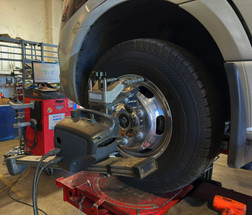
During a recent test drive of our Ford E-Series Class C motorhome project, we experienced exactly that situation. After performing a complete alignment and improving the caster and toe settings, the coach still showed a noticeable drift. The surprising culprit wasn't the alignment—it was a tire.
Let's break down what we learned.
What Alignment Changes Were Made?
The front suspension alignment was adjusted to improve tracking, steering return-to-center, and overall stability.
Changes included:
•Increasing caster on both front wheels
•Setting a slight caster split to compensate for road crown
•Adjusting toe from slightly toe-out to slightly toe-in
•Centering the steering wheel
These adjustments are commonly used to help reduce wander and improve straight-line stability on Ford E-Series chassis motorhomes.
What Does More Caster Do for an RV?
Caster is one of the most important alignment settings for RV handling.
Increasing positive caster generally helps:
•Improve straight-line tracking
•Increase steering stability
•Improve return-to-center after turns
•Reduce driver fatigue
Many RV owners are surprised to learn that a vehicle can be technically "within factory specifications" but still benefit from additional caster tuning for improved drivability.
Why Was the RV Still Pulling After the Alignment?
During the test drive, the coach consistently drifted to the right despite having alignment numbers that were well within an acceptable range.
The reason?
A tire issue.
Earlier testing had revealed that swapping the front tires caused the direction of the pull to change. This is a classic sign of radial tire pull rather than an alignment problem.
In other words, the alignment was improved, but the tire was still influencing the direction the coach wanted to travel.
How Can You Tell If the Problem Is Alignment or Tires?
A simple clue is whether the pull changes when tires are rotated or swapped side-to-side.
Signs of tire-related pull include:
•Vehicle pulls one direction after alignment
•Pull changes direction when tires are swapped
•Steering wheel remains centered but coach drifts
•Tire shows uneven wear, vibration, or out-of-round conditions
Signs of alignment-related pull may include:
•Off-center steering wheel
•Uneven tire wear
•Poor return-to-center
•Excessive wander or rut tracking
In many cases, both issues may exist at the same time.
Do Tires Really Affect RV Handling That Much?
Absolutely.
Tires are the only part of the RV touching the road, and they can dramatically influence handling characteristics.
During our evaluation, the aging front tires showed signs that they were contributing to:
•Steering pull
•Vibration
•Wheel shake
•Increased sensitivity to road crown
Before adding more suspension upgrades, replacing questionable tires is often the smartest next step.
What's the Best Tire Tread Pattern for RV Handling?
For most motorhomes, a rib-style highway tread generally provides the best steering stability and tracking.
Aggressive tread patterns with large tread blocks can create:
•Increased tread squirm
•Wandering
•Less precise steering feel
•More steering corrections
If you frequently travel in snow or off-pavement conditions, an all-season tire may make sense. However, for maximum highway stability, a ribbed highway tread is often the preferred choice.
Why Does My RV Handle Differently When Loaded?
Many RV owners don't realize that loading can significantly affect alignment.
On Ford Twin I-Beam suspensions especially, ride height changes can alter toe settings and handling characteristics.
That's why we recommend:
•Loading your RV as it will be used for travel
•Filling tanks as appropriate
•Having the alignment checked in travel-ready condition
This provides the most accurate alignment results for real-world driving.
Should I Upgrade Suspension Components Before Replacing Tires?
Usually not.
Safety and maintenance items should come first.
Prioritize:
1. Tires
2. Brakes
3. Wheel bearings
4. Steering and suspension inspection
5. Handling upgrades
A worn tire can easily mask the benefits of alignment corrections and suspension upgrades.
A good alignment is critical for RV handling, but it's not always the entire solution.
If your motorhome still pulls after an alignment, don't automatically assume the alignment shop missed something. Tire condition, tire construction, and radial tire pull can have a major impact on steering behavior.
In our testing, the alignment improved steering feel, tracking, and wheel centering. However, replacing the aging front tires is the next logical step before making further handling adjustments.
The lesson? Always address tire and safety concerns first, then fine-tune the suspension for the best possible driving experience.
Need help improving your RV's handling? Contact Henderson's Line-Up for expert RV suspension, steering, alignment, and handling solutions. Thank you for reading this blog and until next time we wish you safer and happier driving.