
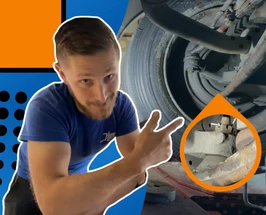
Chevy P30/P32 Ball Joint Problems: Why the Correct Ball Joint Matters
Chevy P30/P32 Ball Joint Problems: Why the Correct Ball Joint Matters
Excessive ball joint play on a Chevy P30/P32 may not always mean the joint is simply worn out. Learn how the wrong ball joint taper can create dangerous movement even when the hardware appears properly installed.
If you notice excessive play in the front suspension of your Chevy P30 or P32 motorhome, a worn ball joint might seem like the obvious culprit. But what if the ball joint isn't simply worn out? What if the wrong ball joint was installed in the first place? That's exactly the type of problem that can be particularly concerning. A replacement ball joint may appear to install correctly. The nut can be tightened, torqued, and secured with a cotter pin, yet the ball joint stud can still move inside the steering knuckle if the taper is incorrect. Understanding why that happens starts with knowing what a ball joint does and why choosing the correct replacement part is so important.
What Does a Ball Joint Do?
Ball joints are an important part of the steering and suspension system on vehicles with independent front suspension. On this type of suspension, you'll generally find an upper and lower ball joint. These joints connect the steering knuckle to the control arms and allow two important types of movement to occur. First, they allow the steering knuckle to rotate when you turn the steering wheel. Second, the ball joints articulate as the control arms travel up and down with suspension movement. Because ball joints are involved in both steering and suspension movement, excessive play can affect how securely and predictably the front suspension operates.
What Is the Difference Between a Ball Joint and a Kingpin?
The type of steering joint you'll find depends largely on the suspension design. A heavy-duty solid front axle suspension, commonly used on motorhomes, buses, and heavy-duty trucks, typically uses kingpins or a similar arrangement as the pivot point for the steering knuckle. With an independent front suspension, ball joints are generally used instead. The Chevy P30/P32 motorhome chassis discussed here uses independent front suspension, so upper and lower ball joints allow the steering knuckle to rotate while accommodating suspension travel.
How Much Ball Joint Play Is Too Much?
Ball joints should always be inspected for excessive movement. However, seeing movement does not necessarily tell you why the movement is occurring. It would be easy to see significant movement at a ball joint and conclude that the joint itself has simply worn out. In this particular P30/P32, closer inspection revealed something much more concerning. The problem appeared to be that the wrong ball joint had been installed.
Why Are There Different Ball Joints for Chevy P30/P32 Chassis?
The P30/P32 platform went through many different configurations during its long production history. One important distinction on earlier chassis involves the braking configuration.
Depending on the chassis setup, these vehicles could be equipped with:
- Rear disc brakes
- Rear drum brakes
The overall chassis configuration affects the ball joint application, including the size of the ball joint stud and its taper. On the coach being inspected, the chassis was equipped with rear disc brakes. However, it appeared that a ball joint intended for a rear-drum-brake application had previously been installed. That difference matters because the tapered ball joint stud must properly match the tapered opening in the steering knuckle.
Why Does the Ball Joint Stud Have a Taper?
The ball joint does not simply use a straight bolt passing through a hole. The stud and corresponding opening in the steering knuckle are tapered. When the correct components are assembled and tightened, those matching tapered surfaces mate together properly. If the replacement ball joint uses an undersized or otherwise incorrect taper, the stud may not properly seat inside the steering knuckle. That can leave room for movement between the two components. This is where the problem can become particularly deceptive.
Can the Wrong Ball Joint Still Be Installed?
Yes, and that's one of the most important lessons from this situation. An incorrect ball joint can potentially be assembled far enough that someone performing the repair may believe everything is correct.
The installer could:
- Insert the ball joint stud into the steering knuckle.
- Install the retaining nut.
- Tighten and torque the nut.
- Install the cotter pin.
- Look at the completed assembly and assume the repair is finished.
The nut can be tight. The cotter pin can be installed. The assembly can look secure. But if the taper on the ball joint stud doesn't properly match the tapered hole in the steering knuckle, the stud can still move inside the opening. That's why simply being able to install a replacement steering or suspension component does not prove that it is the correct component.
Why Is an Incorrect Ball Joint Taper Concerning?
The ball joint is part of the connection that allows your front wheel assembly to steer and move with the suspension. If the tapered stud is undersized for the opening in the steering knuckle, the stud can move where it should instead be securely seated. That can create the appearance of extreme ball joint play even if the problem is not traditional wear inside the ball joint itself. It also means replacing the component based solely on appearance or assuming that an existing part must be correct because it is already installed can lead to problems. The application and physical dimensions still need to be verified.
What Should You Check When Replacing a Ball Joint?
Whenever you're replacing a component with a tapered shaft, don't rely solely on the part appearing similar or fitting into the opening.
Compare the replacement part with what you're removing.
Pay close attention to:
- Stud diameter
- Taper size
- Taper profile
- Overall dimensions
- How the stud seats in the mating component
The replacement taper needs to match both the original component and the tapered opening where it will be installed. This principle doesn't apply only to ball joints. The same attention should be given when working with other steering components that use tapered connections, including:
- Tie rod ends
- Drag link ends
- Other steering linkage components with tapered studs
Taking a few extra moments to compare the components can prevent a much larger problem later.
Why Can P30/P32 Parts Selection Be Complicated?
The Chevy P30/P32 was produced in many configurations over the years, which is one reason identifying the correct replacement components deserves extra attention. Two motorhomes that appear very similar may not necessarily use every identical steering or suspension component. Differences in chassis configuration can determine which part is correct. That's especially important when working on an older motorhome that may have already had decades of maintenance and repairs performed by previous owners or shops. You cannot always assume that the part currently installed is the correct reference simply because it has been on the coach for years.
What If You Find Excessive Play in Your P30/P32 Front Suspension?
If you discover excessive movement in the front suspension, the next step should be determining exactly where that movement originates. Don't immediately assume that every loose-looking component has simply reached the end of its service life.
The inspection should determine whether you're dealing with:
- Wear within the component
- An incorrect replacement part
- Improper fit between components
- Another steering or suspension issue
On an older chassis such as the Chevy P30/P32, careful inspection becomes particularly important because of the different configurations produced over the years and the repairs that may have been performed throughout the vehicle's life.
What Does This Mean for Chevy P30/P32 Motorhome Owners?
Excessive ball joint movement should never be ignored, but this situation demonstrates why proper diagnosis matters just as much as identifying the movement itself. In this case, what initially looked like an extremely worn ball joint appeared to be an incorrect ball joint application. The undersized taper allowed the stud to move inside the steering knuckle even though the retaining hardware could be tightened and secured. The key takeaway is simple: a part fitting into place does not necessarily mean it is the correct part. Whenever ball joints, tie rod ends, drag link ends, or other tapered steering components are replaced, the taper and dimensions of the replacement component should be carefully compared and verified.
If you have questions about Chevy P30/P32 steering and suspension components, replacement parts, or other motorhome handling upgrades, contact SuperSteer at (888)898-3281 or visit supersteerparts.com. Our team can help you identify the appropriate components for your chassis. If you're experiencing steering play, unusual handling, front suspension movement, or your motorhome is due for an alignment or suspension inspection, contact Henderson's Line-Up in Grants Pass, Oregon at (541)479-2882 or visit hendersonslineup.com to schedule an appointment. Thank you for reading this blog and until next time we wish you safer and happier driving.
Published: October 2026
About the Author:
Tommy Henderson is the third-generation CEO of Henderson’s Line-Up and holds a bachelor’s degree in mechanical engineering. Growing up in the family business, Tommy has spent his career around RV steering, suspension, alignment, and handling. Today, he continues Henderson’s Line-Up’s hands-on approach to solving RV handling problems while helping develop solutions through SuperSteer, the parts and product division of Henderson’s Line-Up.